How to Master a Geometry Dash “Jump”: Finding Rhythm, Timing, and Flow
Overview
- 2
- 2
- 150
Description
Introduction
If you’ve ever watched a speedrun video and thought, “I could never do that,” you’re not alone. But “extreme” geometry movement usually starts the same way for everyone: with one small, interesting jump—one moment where your timing clicks and the game suddenly feels readable.
A geometry jump is that satisfying beat when your character launches into motion and you understand the pattern. It’s part reflex, part observation, and part rhythm. One of the best games for learning how to experience those jumps is Geometry Dash—because it turns short, sharp challenges into something you can practice like a skill.
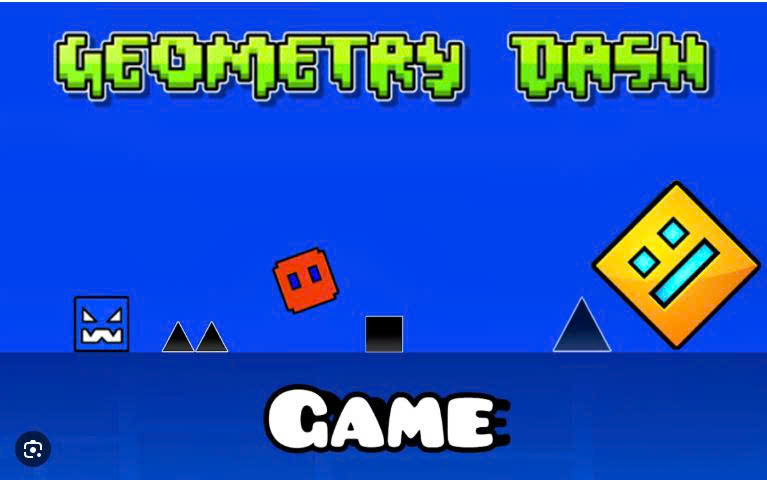
If you’re curious about where to start or want a refresher on the platform, you can check out Geometry Dash (it’s the main example throughout this article).
In this guide, I’ll describe how to “play” the idea of a geometry jump—using Geometry Dash as the main example—without turning it into a brag contest. The goal is to help you enjoy the learning process and make progress you can actually feel.
Gameplay
1) Start by choosing the right kind of level
Not every level is built for your current skill. If you want interesting jumps, look for levels where the rhythm feels consistent rather than chaotic. A good starting point is a level with:
- predictable obstacles (you can spot the spacing pattern)
- short sections you can repeat quickly
- a structure that lets you retry without fatigue
In Geometry Dash, you’ll notice some levels “tell a story” with timing. Those levels are great for learning jumps, because once you understand the pattern, the rest becomes smoother.
2) Understand what a “jump” really means in practice
In Geometry Dash, the jump isn’t only the press of a button. It’s the whole moment from approach to landing. Try to watch three things before you react:
- Distance: how long the jump trigger is from the obstacle
- Timing: how your clicks align with the beat (or the object movement)
- Position: where your character will be after the jump, not where it is right now
A helpful mental shift: don’t think “I need to press when I see danger.” Think “I need to press so that my character arrives safely at the correct point.”
3) Learn by “chunking” the level
Instead of trying to master the entire run, break it into chunks—tiny segments where you can repeat success. For example:
- the first jump
- the jump sequence that follows
- the part where you usually die
- the recovery section after a mistake
When you do this, each chunk becomes a mini-goal. The “interesting” part of the geometry jump is that it stops being random. It becomes a tiny puzzle with an answer you can find through repetition.
4) Use your deaths as information
Deaths in Geometry Dash are annoying, but they’re also feedback. Each failure can teach you something specific:
- If you die too early: your timing is ahead of the pattern
- If you die too late: your timing lags behind the pattern
- If you pass too close: your jump height/spacing expectation is off
- If you die at different points each time: you’re not stabilizing your rhythm yet
Try not to “fix everything” after one death. Pick one variable—timing—and adjust it slightly. That’s how runs start to improve.
5) Aim for consistency before speed
The most enjoyable jump is rarely the fastest one. It’s the one you can repeat. Consistency builds confidence, and confidence makes the game feel less like pressure and more like exploration.
When you finally nail a jump cleanly, take a moment to notice why it worked. Was it because you started paying attention earlier? Did you hold your focus on the spacing rather than the obstacle shape? Learning your own pattern is what keeps you improving.
Tips
1) Watch “where” first, “when” second
Before pressing anything, glance at the next obstacle and ask: “What exact point do I need to be at?” Then let your reaction happen from that intention.
This sounds small, but it prevents the classic mistake of reacting late because you’re staring at the obstacle’s edge.
2) Count the rhythm lightly
Even if you don’t fully lock into the music, you can count beats in your head. Many players find that timing improves once they treat jumps like part of a tempo, not a reaction test.
You don’t need perfect math. Just pick a simple internal count and stick with it for that section.
3) Practice the “worst” moment only
If there’s a jump where you always fail, don’t grind the whole level. Focus on that specific moment, replaying until it becomes predictable.
In Geometry Dash, you can improve faster by isolating trouble. When that part finally clicks, the rest often follows.
4) Reduce distractions and stabilize your setup
Geometry jumps depend on feel. Make sure your environment supports that feel:
- keep volume at a comfortable level (so you can hear timing cues)
- avoid changing settings mid-session
- take short breaks if your focus dips
If you start missing because you’re tired, that’s not a “skill issue.” It’s your attention fading—and it can be fixed by stepping away for a minute.
5) Celebrate small wins
A clean run is great, but it’s not the only progress. If you’ve made it past a section you used to skip every time, that counts.
The best part of experiencing geometry jumps is realizing you’re learning how to read movement. You can feel that growth even before you “beat” the level.
Conclusion
A geometry jump is an experience, not just an outcome. In Geometry Dash, every successful jump is a tiny conversation between your eyes, your timing, and your expectations. It becomes interesting when you stop treating it like a random test and start treating it like a repeatable pattern.
Choose levels that let you practice without burning out. Chunk the run. Let each death teach you one clear lesson. Then focus on consistency, not perfection.
Eventually, you’ll notice something exciting: you’re no longer guessing—you’re predicting. And once you reach that point, the game’s sharp obstacles start to feel like rhythm you can ride.
If you want to jump into the Geometry Dash world and explore from a solid starting point, you can use Geometry Dash as a reference when you’re getting oriented. The rest is yours: one jump at a time.
Address
Open on Google Maps- Address 4257 Hanifan Lane Roswell, GA 30076
- City Sunrise
Details
Updated on August 17, 2026 at 1:21 pm- Price: Rs 1,500
- Property Size: 150
- Bedrooms: 2
- Bathrooms: 2